
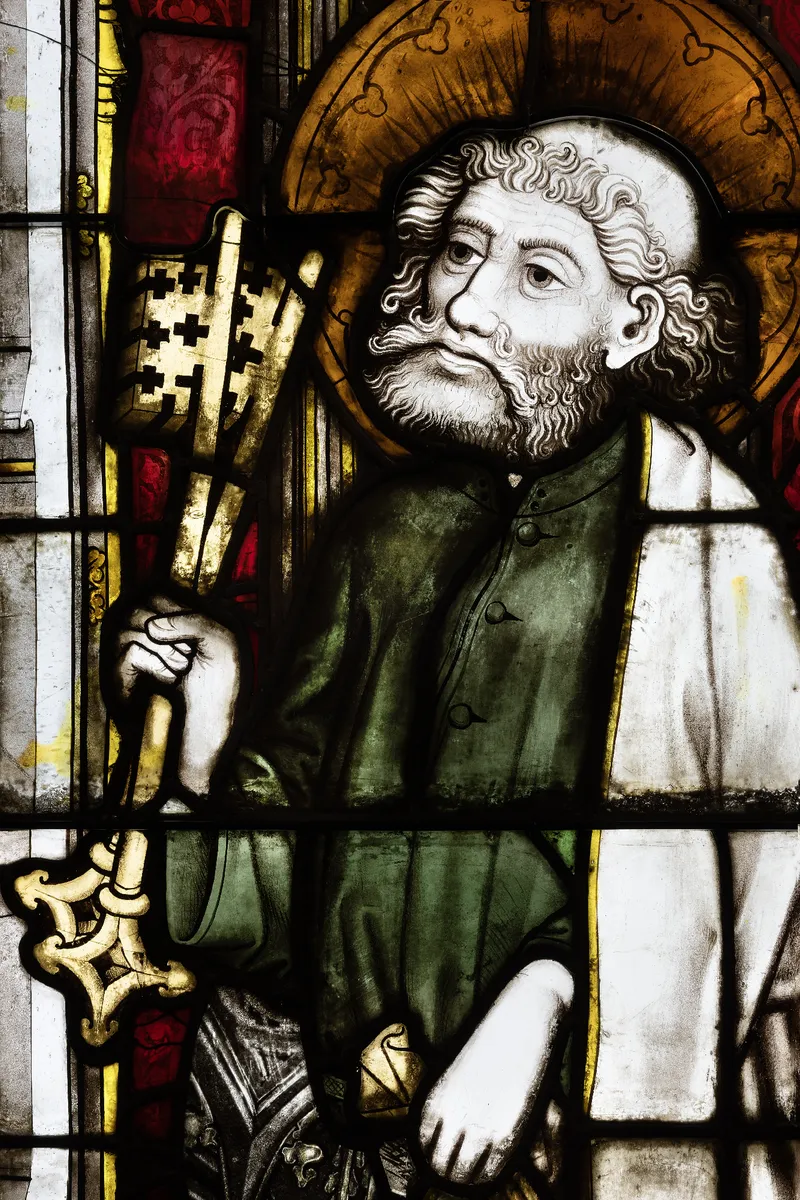
Writing in the twelfth century, the French cleric, statesman, and one-time regent Abbot Suger (d. 1151) imagined faith as an experience shaped by the material things with which he surrounded himself. Artistic invention, craftsmanship, and the rarefied world of precious objects were, for him, stepping stones to higher contemplation. They called him away from external cares and allowed his thoughts to wander from the ‘slime of the earth’ toward the ‘purity of Heaven’. The more refined the work, the more powerfully it could lift the faithful toward God.
If we think of the Middle Ages (from the Latin medium aevum) as exactly that—a period ‘in between’ the Classical past and the bright light of the Renaissance, often shadowed by simplified notions of primitiveness, ignorance, disease, and darkness—Suger's words bring us sharply to our senses. Here was a man who believed in the full-throated encouragement of the arts, the relentless honing of artistic skill, and the beautification and enrichment of the material world. He may have recorded his fascination with and love for works of art more fully than any other theologian of his age but he was far from alone. His ideas are vividly reflected in the extraordinary outpouring of creativity that medieval art still has the power to convey many centuries later. From gemstones to stained-glass windows, from the smallest goldsmith’s work to the largest cathedrals, all artistry was sacred—and perfection the goal.
This exhibition brings together more than thirty masterpieces of medieval art from the fields of painting, sculpture, textiles, goldsmith’s work, stained glass, and manuscript illumination, created by artisans working between the twelfth and sixteenth centuries. Together, they reveal the extraordinary aesthetic innovations reshaping Europe during this period and the remarkable range of materials mastered by artists whose skills rival—and at times surpass—those of any generation since.
View more


Retablos II Spanish Paintings and Polychromed Sculpture from the 13th to 16th centuries


Indian and Persian Drawings An Exhibition in Collaboration with Les Enluminures, New York


A Border Cartouche from one of the Ardabil Medallion Carpets Central Persia, Probably Qazvin, c. 1539–1540


